May 27, 2014

The Narrow Road to the Deep North

 
August, 1943. In the despair of a Japanese POW camp on the Thai-Burma death railway, Australian surgeon Dorrigo Evans is haunted by his love affair with his uncle's young wife two years earlier. Struggling to save the men under his command from starvation, from cholera, from beatings, he receives a letter that will change his life forever.

This savagely beautiful novel is a story about the many forms of love and death, of war and truth, as one man comes of age, prospers, only to discover all that he has lost.

 
Less is more. Where have we heard that before? Well, it was certainly said a few times this month concerning Richard Flanagan’s epic tome, The Narrow Road to the Deep North. Even the title is too long, was Anne’s comment!

At close to 500 pages, this combined story of enduring love and futility of war was felt to be well written but, alas, too wordy.

This can be an often occurring theme in our discussions … when does a book lose its impact under the weight of too many words? That is of course within each and every reader’s discretion. In truth, the trick of engaging the reader with just the right amount of information and dialogue is a craft perfected by only a handful of talented writers, so where does this leave Flanagan and his latest offering?

Well, the majority of us did get through this novel and although not enamored by the main character, Dorrigo Evens or by the attempt at romance, there was an overwhelming respect for Flanagan’s personal quest at telling this story. Those of us who heard the author interviewed found it much easier to plough through the pages. His impeccable research and personal motivation added emotional depth that may have been lost to anyone not privy to the conversation.
The Narrow Road to the Deep North (being the Burma Railway) gave a poignant and emotive picture of POWs and their plight, and although many of us have heard and read of this sad history, Flanagan was still able to cleverly, and some agree, perfectly, engross the reader. We also felt including the Japanese perspective may have helped in securing the quality of the read.

Our conversation covered many of the topics any novel of war tends to inspire, but we did find ourselves pondering specifically the philosophy of training killers, Korean and Japanese relations, returning POWs (their strengths and their flaws) and whether Dorrigo was in fact Weary Dunlop! The individual stories wound into prison life gave us all gratification in a place and time where little of such could be found, adding yet another dimension to this story ... a human touch that could only be bound in truth, not in imagination.

The Narrow Road to the Deep North is listed for this year’s Miles Franklin Award.

May 6, 2014

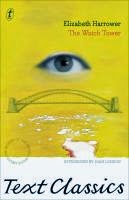
The Watch Tower by Elizabeth Harrower

http://mylibrary.wollongong.nsw.gov.au/cgi-bin/spydus.exe/ENQ/OPAC/BIBENQ?ENTRY_NAME=BS&ENTRY=the+watch+tower+elizabeth&ENTRY_TYPE=K&NRECS=10&SORTS=HBT.SOVR&SEARCH_FORM=%2Fcgi-bin%2Fspydus.exe%2FMSGTRN%2FOPAC%2FBSEARCH&CF=GEN&ISGLB=0 Breaking their poses like trees snapping branches, the women urgently regarded each other, cleared away all signs of work in an instant, examined their souls for defects, in a sense crossed themselves, and waited.
After Laura and Clare are abandoned by their mother, Felix is there to help, even to marry Laura if she will have him. Little by little the two sisters grow complicit with his obsessions, his cruelty, his need to control.

Set in the leafy northern suburbs of Sydney during the 1940s, The Watch Tower is a novel of relentless and acute psychological power.
 
Our book club is always keen to gain new knowledge and perspective when it comes to reading novels, especially if said novel is considered a modern masterpiece! What serious reader doesn’t want to add to their list of read classics?
So it was with this intension that we ploughed through Australian author Elizabeth Harrower’s The Watch Tower.
Now, although our opinions differed somewhat, there was no doubting the emotion that this book exposed. We all felt the enslavement and vulnerability thrust upon Laura and Clare by the misogynist Felix, and although this left the majority of us frustrated and angry, there was some empathy for two unexperienced and emotionally inept women in a time when there was little or no support for such souls.
There were those of us who disliked this book intensely. Found the story line grim and too slow and the characters unlikable. Then we had the opposite … brilliant writing that looked to expose the raw reality of domestic abuse within a dark, psychological thriller.
Eleanor did not get to read this month’s selection, but she did see a great interview with Harrower and it led her to believe that The Watch Tower may have had some biographical content. This sort of insight usually brings more questions than answers to our discussions. If only we could have An Audience With … Elizabeth Harrower!
If you are keen to see our book clubs in action, don’t miss our Audience With David Cairns this month.

Mar 25, 2014

The Cuckoo's Calling by Robert Galbraith


When a troubled model falls to her death from a snow-covered Mayfair balcony, it is assumed that she has committed suicide. However, her brother has his doubts, and calls in private investigator Cormoran Strike to look into the case.
Strike is a war veteran – wounded both physically and psychologically – and his life is in disarray. The case gives him a financial lifeline, but it comes at a personal cost: the more he delves into the young model’s complex world, the darker things get – and the closer he gets to terrible danger . . .
A gripping, elegant mystery steeped in the atmosphere of London – from the hushed streets of Mayfair to the backstreet pubs of the East End to the bustle of Soho – The Cuckoo’s Calling is a remarkable book. Introducing Cormoran Strike, this is the acclaimed first crime novel by J.K. Rowling, writing under the pseudonym Robert Galbraith.
 
We had a small group this month and not everyone got a chance to read the selection (life does get in the way of our reading at times!), so it was left to just five of us to pass judgment on J.K. Rowling’s latest addition to adult fiction.
Scores were high; seven through to nine, and the majority of us found a great deal of fondness for the main characters, Strike and Robin. Their all too human traits, good and bad were essential in making them real and although there were many characters coming and going (a few too many Tera thought), the two main protagonists held firm and developed well. 
Viti loved Rowling’s pictorial of London neighbourhoods, especially Mayfair. She lived in the area for a time and could feel herself re-walking the streets and visiting the markets. High praise when a novel can do that!
Nancy commended the cleverly worked out plot and found it ‘unputdownable’. Elenor loved the use of language and felt the characters were bestowed real flesh and blood, something that was instrumental to her enjoyment level. She also believed it abundantly clear that the author was in fact female, as she felt male writers are rarely able to award characters such life.
 Tera on the other hand was underwhelmed (she scored the only seven). For a murder mystery she wanted more built up tension and felt there was something fundamentally missing. And although she continued reading hoping for that elusive climax, ‘dull’ was her one word appraisal.
Our discussion concluded with an interesting chat on disabilities and the challenges those with a prosthesis face. Strike’s everyday struggle with his false limb worked its magic on our group and required us all to stop and think what many face on a daily basis.  In conclusion, we were very happy (although not surprised) to learn that Cormoran Strike will be back!


Feb 27, 2014

The Happiest Refugee by Anh Do

http://mylibrary.wollongong.nsw.gov.au/cgi-bin/spydus.exe/FULL/OPAC/BIBENQ/9339977/17572339,1
Anh Do nearly didn’t make it to Australia.
His entire family came close to losing their lives on the sea as they escaped from war-torn Vietnam in an overcrowded boat. But nothing – not murderous pirates, nor the imminent threat of death by hunger, disease or dehydration as they drifted for days – could quench their desire to make a better life in the country they had dreamed about.
The Happiest Refugee tells the incredible, uplifting and inspiring life story of one of our favourite personalities. Tragedy, humour, heartache and unswerving determination – a big life with big dreams.
Anh’s story will move and amuse all who read it.
 

What a great book to start the year with! Anh Do’s infectious optimism throughout this memoir put us all at our happiest. We loved his positive nature and willingness to see the funny side of such an extraordinary life. The honesty in which he portrayed his family’s early days in their new country was a delight and we all felt anyone who had reservations about refugees would do well to read this book. In fact, some of us believe you wouldn’t be human if you were not moved by Do’s story. Some believe it was mostly a testament to his mother and father and we all found ourselves very interested in the whole Do clan. Cathy would have liked to hear more about Anh’s sister, and everyone found favour with his father’s philosophical view of time – ‘There are only two types of time … now and too late.’
 
The many tales, both humorous and heartbreaking, gave the book balance and Ann felt it well written/edited with the tragic being offset by humour in just the right measure. Anh’s comedic talent definitely shines through in his writing …  we all had our favourites, such as the fish tanks, the old combie breakdown, the RSL gig and his mother’s roast pig dinner, so our discussion was mostly on the merry side recalling each of these anecdotes.
However, we did touch on some of the more serious aspects, such as the upheaval refugees and immigrants experience, how it effects childhood and of course the racism. We all wondered if the xenophobic traits that seem so focused on refugees today has always been there and what will it take to create a more welcoming and accepting Australia? All very important questions that Anh’s story was never meant to answer, but in our view certainly generated an essential conversation.
In closing, it is fair to say that we all got something from this book. Do’s conversational, light-hearted patter made this vital story a pure pleasure to read.
Do yourself a favour and pick it up soon!


Feb 7, 2014

2013 Favourites


In scoring our reads throughout the year, we are able to determine which books gave us the most enjoyment. Every so often there is the odd surprise … a book that does not necessarily rate high in any other quarters, will stand out as an exceptionally wonderful read for us.


Our winner this year is one of those amazing books that brings enjoyment through beautiful and intelligent writing, in spite of its theme. There were some criticisms but The Absolutist by John Boyne impressed our entire group and scored high, putting it just above our last read for the year The Unlikely Pilgrimage of HaroldFry by Rachel Joyce. Harold found a spot in most of our hearts, as did Renee in Elegance of the Hedgehog by Muriel Barbery, which came a close third.


Our enjoyment is more often than not increased by the good discussion a book can lead us to. Sense of an Ending by Julian Barnes and The Submission by Amy Waldman are good examples of this. We all love being challenged not only by the literature itself but by the empathy it can invoke and the questions it can raise, in our minds and our hearts.

We discovered late last year that a recent study has shown that reading novels can make you a better person. By seeing all sides of a character in a book, unlike in real life, we can understand and empathize more, and literally walk in their shoes.

 
Makes a whole lot of sense to us and scores a big one for reading, don’t you think?


Jan 30, 2014

The Unlikely Pilgrimage of Harold Fry by Rachel Joyce


Meet Harold Fry, recently retired. He lives in a small English village with his wife, Maureen, who seems irritated by almost everything he does. Little differentiates one day from the next. Then one morning a letter arrives, addressed to Harold in a shaky scrawl, from a woman he hasn’t heard from in twenty years. Queenie Hennessy is in hospice and is writing to say goodbye.
 But before Harold mails off a quick reply, a chance encounter convinces him that he absolutely must deliver his message to Queenie in person. In his yachting shoes and light coat, Harold Fry embarks on an urgent quest. Determined to walk six hundred miles to the hospice, Harold believes that as long as he walks, Queenie will live. A novel of charm, humour, and profound insight into the thoughts and feelings we all bury deep within our hearts.
 
It would be quicker to list what we didn’t talk about this month!
Harold Fry gave us a very deep pool to draw from; life journey, childhood, relationships, reflection, memory, atonement. In fact, it seemed there was no emotion or human condition that was left untouched.
In general our group felt empathy for Harold, all be it combined with a good measure of frustration.
Most of us related to the healing effects of walking and Chris believed Harold’s pilgrimage represented life’s journey – in which no one can be truly prepared for, and that the voyage is the key, not the destination. This theme runs thick throughout, but there is much more in this novel. The rag tag group that latched on to Harold along the way had us lamenting the role of the media and the ability of other people to push their own agenda. This we felt was all well written and portrayed in a realistic light.
Negatives?
Well, a few of us felt slightly bogged down at times and Tera found the constant reflecting full of regrets too depressing. Viti saw a paralleling in the storyline with Julian Barnes’ novel A Sense of an Ending which we read last year, which not necessarily a negative, does tend to take any originality from a novel.
Nevertheless, we all scored this book six plus stars and took the walk with Harold and his highly prized shoes (what exactly did they represent?) voluntarily, and our reward was an engaging and poignant read.  


Dec 19, 2013

The Woman in Black by Susan Hill


Arthur Kipps, a junior solicitor, is summoned to attend the funeral of Mrs Alice Drablow, the sole inhabitant of Eel Marsh House, unaware of the tragic secrets which lie hidden behind the shuttered windows. The house stands at the end of a causeway, wreathed in fog and mystery, but it is not until Arthur glimpses a wasted young woman, dressed all in black, at the funeral, that a creeping sense of unease begins to take hold, a feeling deepened by the reluctance of the locals to speak of the woman in black –
and her terrible purpose.
 
The ghost story genre has not been a frequent visitor to our club, in fact the only others in ten years are The Little Stranger by Sarah Waters and Beloved by Toni Morrison. Both of these of course are much more than mere ghostly tales, but you see where we’re coming from. The Woman in Black impressed a few of us with the imagery and sparse Victorian/Gothic style writing. Hill was praised for her visual descriptions that created an atmosphere of intrigue so subtle that the reader was never sure whether the main character, Arthur Kipps, was experiencing a supernatural phenomena, subliminal suggestion or simply an over active imagination.
 
There was an overwhelming opinion that this was ‘not really my sort of book’ and that it was simply a yarn told for the purpose of entertaining. In fact, Ann believes Cripps himself was just spinning a tale.
 
Regardless, we did find ourselves entertained, both by the book and the movie starring Daniel Radcliffe as Cripps. The more than minor changes made in the screenplay gave us good material for discussion. Why the changes (particularly in the closing chapter)? Well, the cinema does like a nice tidy ending, and we believe they found it!