Aug 28, 2014

http://mylibrary.wollongong.nsw.gov.au/cgi-bin/spydus.exe/ENQ/OPAC/BIBENQ?ENTRY_NAME=BS&ENTRY=luminaries+catton&ENTRY_TYPE=K&NRECS=10&SORTS=HBT.SOVR&SEARCH_FORM=%2Fcgi-bin%2Fspydus.exe%2FMSGTRN%2FOPAC%2FBSEARCH&CF=GEN&ISGLB=0
 It is 1866, and Walter Moody has come to make his fortune upon the New Zealand goldfields. On arrival, he stumbles across a tense gathering of twelve local men, who have met in secret to discuss a series of unsolved crimes. A wealthy man has vanished, a whore has tried to end her life, and an enormous fortune has been discovered in the home of a luckless drunk. Moody is soon drawn into the mystery: a network of fates and fortunes that is as complex and exquisitely patterned as the night sky.
 
This year’s most challenging read would have to be Booker winner, The Luminaries by Eleanor Catton. Not a group to easily shy away from a challenge, everyone made a concerted effort to tackle this 800+ page door stop!
From a discussion perspective, this novel delivered an abundance of material. We found the author’s use of astrological charts to define her characters intriguing. Their circular synergy was captivating, releasing piece by piece everything needed to form a full picture of this literary jigsaw puzzle.
Although clearly a mystery set within the Victorian backwater of New Zealand’s south island, the multitude of layers formed by the different character viewpoints made this more than just a whodunit novel (Dickens came to mind for most of us). Keeping track of the various cast members was not easy, but for those of us who persevered, the awards were great. The plot, setting and description were all brilliantly combined and none of us could say we were not literally picked up and placed on the muddy streets of a colonial goldfield!
Alas, it was a little too much for some of us, who simply found the volume of pages a stumbling block too big to get over. But if you love a large chunk of well researched and brilliantly constructed literature, then The Luminaries must be your next big read!


Jul 31, 2014

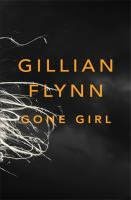
Gone Girl by Gillian Flynn

Our meeting was very sad this month as we said goodbye to our dear friend and fellow book cluber Carol Clancy. Carol joined us some 10 years ago and her lovely smile and pleasant disposition is going to be missed by us all. Carol would have been the first of us to rail against the hatred that has resulted in the MH17 disaster, so for her sake we did not dwell on that but recalled some of our more enjoyable moments with her. In her own quiet way she will always be there, at our meetings.

 What did we think of Gone Girl? Well, it scored high with most of the group (a 10 in Nancy’s case) but as low as 6 with others. There was no argument concerning the creepy factor of Amy. Her sociopathic character inspired great discussion, mostly about whether her extremely well-thought out scheme was plausible. It was decided that realistic or not, the storyline, although somewhat disturbing, was well constructed, compelling and kept you coming back for more. In fact, a few of us believed that the constant ‘whodunit’ interchange was a key element in the story’s appeal.

 
http://mylibrary.wollongong.nsw.gov.au/cgi-bin/spydus.exe/FULL/OPAC/BIBENQ/3513563/17614402,2

Cathy and Denise both enjoyed its contemporary setting, ignoring the crude language, but were curious about what message the author was looking for. Ann found too much background padding and wanted the story to get moving. Within the group there was little to no love for any of the characters, but it was unanimous that Nick was nothing more than an average male (no better, no worse than most) and that Amy needed to be caught and held to account! The role of the media was also touched on, along with Amy’s parents and their lapse of parental duty heavily underlined.


The book’s conclusion also gained much interest in our group. Some thought it weak, others clever. We all had an idea of how we thought it would play out, and apparently the movie has its own ending … so with the film placed firmly on our ‘to see’ list, we will all be waiting to see what they have come up with!


Jun 24, 2014


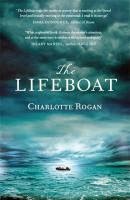
http://mylibrary.wollongong.nsw.gov.au/cgi-bin/spydus.exe/FULL/OPAC/ALLENQ/161098/17604206,1In the summer of 1914, the Empress Alexandra, a magnificent transatlantic liner, suffers a mysterious explosion en route to New York. On board are Henry Winter, a rich banker, and his young new wife, Grace. Somehow, Henry manages to secure a place in a lifeboat for Grace. But the survivors quickly realize it is overloaded and could sink at any moment. For any to live, some must die.
As the castaways battle the elements, and each other, Grace watches and waits. She has learned the value of patience – her journey to a life of glittering privilege has been far from straightforward. Now she knows that life is in jeopardy, and her very survival is at stake.


As a rule, the underlying theme of your typical novel is not hard to determine. In fact, it tends to be one of the first observations our group will make and agree upon. Then along comes The Lifeboat. The title alone cries out ‘survival’ as its focus. But as our discussion moved along it became clear that Grace was hiding more than a callous need to survive.
It was Anne who suggested that Rogan’s main character was in fact even lying to us and that as readers we only have her version of what happened in the lifeboat. Can we believe her? In learning how she purposefully manufactured her life (before the shipwreck) and those in it, we think not!
So, now our thread of thought seems to be moving into the realm of manipulation and falsification and how one person uses others to advance their own ends. Some argue that this is a form of survival, but this cut little ice with most of us.
In fact, there was no sympathy for Grace within our group, or for anyone else for that matter. We all conceded that the story was well written, but there was a certain lack of connectivity to the passengers and their predicament, where we thought we should be feeling a great deal of sympathy and compassion.
Much was left to speculation, which in turn left us wondering what we would have done and begs that big question any story of this sort asks … is it worth sacrificing a few for the many?
This novel provides no whys … only whats, so if you’re looking for a read that will give you all the answers, we suggest steering clear (pun intended) of The Lifeboat!

May 27, 2014

The Narrow Road to the Deep North

 
August, 1943. In the despair of a Japanese POW camp on the Thai-Burma death railway, Australian surgeon Dorrigo Evans is haunted by his love affair with his uncle's young wife two years earlier. Struggling to save the men under his command from starvation, from cholera, from beatings, he receives a letter that will change his life forever.

This savagely beautiful novel is a story about the many forms of love and death, of war and truth, as one man comes of age, prospers, only to discover all that he has lost.

 
Less is more. Where have we heard that before? Well, it was certainly said a few times this month concerning Richard Flanagan’s epic tome, The Narrow Road to the Deep North. Even the title is too long, was Anne’s comment!

At close to 500 pages, this combined story of enduring love and futility of war was felt to be well written but, alas, too wordy.

This can be an often occurring theme in our discussions … when does a book lose its impact under the weight of too many words? That is of course within each and every reader’s discretion. In truth, the trick of engaging the reader with just the right amount of information and dialogue is a craft perfected by only a handful of talented writers, so where does this leave Flanagan and his latest offering?

Well, the majority of us did get through this novel and although not enamored by the main character, Dorrigo Evens or by the attempt at romance, there was an overwhelming respect for Flanagan’s personal quest at telling this story. Those of us who heard the author interviewed found it much easier to plough through the pages. His impeccable research and personal motivation added emotional depth that may have been lost to anyone not privy to the conversation.
The Narrow Road to the Deep North (being the Burma Railway) gave a poignant and emotive picture of POWs and their plight, and although many of us have heard and read of this sad history, Flanagan was still able to cleverly, and some agree, perfectly, engross the reader. We also felt including the Japanese perspective may have helped in securing the quality of the read.

Our conversation covered many of the topics any novel of war tends to inspire, but we did find ourselves pondering specifically the philosophy of training killers, Korean and Japanese relations, returning POWs (their strengths and their flaws) and whether Dorrigo was in fact Weary Dunlop! The individual stories wound into prison life gave us all gratification in a place and time where little of such could be found, adding yet another dimension to this story ... a human touch that could only be bound in truth, not in imagination.

The Narrow Road to the Deep North is listed for this year’s Miles Franklin Award.

May 6, 2014

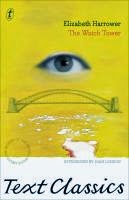
The Watch Tower by Elizabeth Harrower

http://mylibrary.wollongong.nsw.gov.au/cgi-bin/spydus.exe/ENQ/OPAC/BIBENQ?ENTRY_NAME=BS&ENTRY=the+watch+tower+elizabeth&ENTRY_TYPE=K&NRECS=10&SORTS=HBT.SOVR&SEARCH_FORM=%2Fcgi-bin%2Fspydus.exe%2FMSGTRN%2FOPAC%2FBSEARCH&CF=GEN&ISGLB=0 Breaking their poses like trees snapping branches, the women urgently regarded each other, cleared away all signs of work in an instant, examined their souls for defects, in a sense crossed themselves, and waited.
After Laura and Clare are abandoned by their mother, Felix is there to help, even to marry Laura if she will have him. Little by little the two sisters grow complicit with his obsessions, his cruelty, his need to control.

Set in the leafy northern suburbs of Sydney during the 1940s, The Watch Tower is a novel of relentless and acute psychological power.
 
Our book club is always keen to gain new knowledge and perspective when it comes to reading novels, especially if said novel is considered a modern masterpiece! What serious reader doesn’t want to add to their list of read classics?
So it was with this intension that we ploughed through Australian author Elizabeth Harrower’s The Watch Tower.
Now, although our opinions differed somewhat, there was no doubting the emotion that this book exposed. We all felt the enslavement and vulnerability thrust upon Laura and Clare by the misogynist Felix, and although this left the majority of us frustrated and angry, there was some empathy for two unexperienced and emotionally inept women in a time when there was little or no support for such souls.
There were those of us who disliked this book intensely. Found the story line grim and too slow and the characters unlikable. Then we had the opposite … brilliant writing that looked to expose the raw reality of domestic abuse within a dark, psychological thriller.
Eleanor did not get to read this month’s selection, but she did see a great interview with Harrower and it led her to believe that The Watch Tower may have had some biographical content. This sort of insight usually brings more questions than answers to our discussions. If only we could have An Audience With … Elizabeth Harrower!
If you are keen to see our book clubs in action, don’t miss our Audience With David Cairns this month.

Mar 25, 2014

The Cuckoo's Calling by Robert Galbraith


When a troubled model falls to her death from a snow-covered Mayfair balcony, it is assumed that she has committed suicide. However, her brother has his doubts, and calls in private investigator Cormoran Strike to look into the case.
Strike is a war veteran – wounded both physically and psychologically – and his life is in disarray. The case gives him a financial lifeline, but it comes at a personal cost: the more he delves into the young model’s complex world, the darker things get – and the closer he gets to terrible danger . . .
A gripping, elegant mystery steeped in the atmosphere of London – from the hushed streets of Mayfair to the backstreet pubs of the East End to the bustle of Soho – The Cuckoo’s Calling is a remarkable book. Introducing Cormoran Strike, this is the acclaimed first crime novel by J.K. Rowling, writing under the pseudonym Robert Galbraith.
 
We had a small group this month and not everyone got a chance to read the selection (life does get in the way of our reading at times!), so it was left to just five of us to pass judgment on J.K. Rowling’s latest addition to adult fiction.
Scores were high; seven through to nine, and the majority of us found a great deal of fondness for the main characters, Strike and Robin. Their all too human traits, good and bad were essential in making them real and although there were many characters coming and going (a few too many Tera thought), the two main protagonists held firm and developed well. 
Viti loved Rowling’s pictorial of London neighbourhoods, especially Mayfair. She lived in the area for a time and could feel herself re-walking the streets and visiting the markets. High praise when a novel can do that!
Nancy commended the cleverly worked out plot and found it ‘unputdownable’. Elenor loved the use of language and felt the characters were bestowed real flesh and blood, something that was instrumental to her enjoyment level. She also believed it abundantly clear that the author was in fact female, as she felt male writers are rarely able to award characters such life.
 Tera on the other hand was underwhelmed (she scored the only seven). For a murder mystery she wanted more built up tension and felt there was something fundamentally missing. And although she continued reading hoping for that elusive climax, ‘dull’ was her one word appraisal.
Our discussion concluded with an interesting chat on disabilities and the challenges those with a prosthesis face. Strike’s everyday struggle with his false limb worked its magic on our group and required us all to stop and think what many face on a daily basis.  In conclusion, we were very happy (although not surprised) to learn that Cormoran Strike will be back!


Feb 27, 2014

The Happiest Refugee by Anh Do

http://mylibrary.wollongong.nsw.gov.au/cgi-bin/spydus.exe/FULL/OPAC/BIBENQ/9339977/17572339,1
Anh Do nearly didn’t make it to Australia.
His entire family came close to losing their lives on the sea as they escaped from war-torn Vietnam in an overcrowded boat. But nothing – not murderous pirates, nor the imminent threat of death by hunger, disease or dehydration as they drifted for days – could quench their desire to make a better life in the country they had dreamed about.
The Happiest Refugee tells the incredible, uplifting and inspiring life story of one of our favourite personalities. Tragedy, humour, heartache and unswerving determination – a big life with big dreams.
Anh’s story will move and amuse all who read it.
 

What a great book to start the year with! Anh Do’s infectious optimism throughout this memoir put us all at our happiest. We loved his positive nature and willingness to see the funny side of such an extraordinary life. The honesty in which he portrayed his family’s early days in their new country was a delight and we all felt anyone who had reservations about refugees would do well to read this book. In fact, some of us believe you wouldn’t be human if you were not moved by Do’s story. Some believe it was mostly a testament to his mother and father and we all found ourselves very interested in the whole Do clan. Cathy would have liked to hear more about Anh’s sister, and everyone found favour with his father’s philosophical view of time – ‘There are only two types of time … now and too late.’
 
The many tales, both humorous and heartbreaking, gave the book balance and Ann felt it well written/edited with the tragic being offset by humour in just the right measure. Anh’s comedic talent definitely shines through in his writing …  we all had our favourites, such as the fish tanks, the old combie breakdown, the RSL gig and his mother’s roast pig dinner, so our discussion was mostly on the merry side recalling each of these anecdotes.
However, we did touch on some of the more serious aspects, such as the upheaval refugees and immigrants experience, how it effects childhood and of course the racism. We all wondered if the xenophobic traits that seem so focused on refugees today has always been there and what will it take to create a more welcoming and accepting Australia? All very important questions that Anh’s story was never meant to answer, but in our view certainly generated an essential conversation.
In closing, it is fair to say that we all got something from this book. Do’s conversational, light-hearted patter made this vital story a pure pleasure to read.
Do yourself a favour and pick it up soon!