Feb 24, 2015

The Talented Mr Ripley by Patricia Highsmith

Tom Ripley is struggling to stay one step ahead of his creditors and the law, when an unexpected acquaintance offers him a free trip to Europe and chance to start over.

Ripley wants money, success and the good life and he’s willing to kill for it. When his new-found happiness is threatened, his response is as swift as it is shocking.
 
It is rare to have vastly differing opinions on one book, but not unknown to our group … and  something that Highsmith’s Mr Ripley managed this month. Denise found that the constant, repetitive internal dialogue of the main character (Mr Ripley himself) tediously dull and uninspiring. She felt the description of another hotel room, restaurant, train trip etc … would send her over the edge! Not only did she not like Mr Ripley, she had no interest in what would befall him (or those around him) next.
In direct contrast was Anne who thought the whole story clever … a psychological thriller that held her throughout the entire book. The impending likelihood that Ripley would be caught kept the reader in a perpetual state of speculation and doubt.
The perfect result for such a novel.
Other comments tended towards the positive. Some found it ‘quirky and funny’, others thought the sense of place was wonderfully done, bringing Venice in particular alive. We managed to do quite a good job of psychoanalysing Mr Ripley and although we considered him a most unhealthy individual, we mostly agreed that he was not a completely ruthless psychopath. More like your average everyday schizophrenic who sees no obstacle too difficult on the way to his aim. Would he have killed Dickie if the need had not presented itself? This is something we, as mere readers will never know, but the odds are good and thankfully, for those of us who want more of Mr Ripley, Highsmith has provided such through two more Ripley adventures – Ripley Under Water and The Boy who Followed Ripley.

The Heretic's Daughter by Kathleen Kent

http://mylibrary.wollongong.nsw.gov.au/cgi-bin/spydus.exe/FULL/OPAC/ALLENQ/5843994/17520650,1Salem, Massachusetts, 1692. A young woman is hanged, unyielding in her refusal to admit to being a witch.

You Sarah Carrier is bright and wilful, openly challenging the small, brutal world in which her family lives. In this startling novel, she narrates the story of her early life in Andover, near Salem. Her father is English in origin, quietly stoical but with a secret history. Her mother Martha is a herbalist, tough but loving. Despite their conflicts, it is clear that Martha understands her daughter like no other. When Martha is accused of witchcraft, and the whisperings in the community escalate, she makes Sarah promise not to stand up for her in court. As Sarah and her brothers are hauled into the prison themselves, the vicious cruelty of the trials becomes apparent. The Carrier family, along with other innocents, are starved and deprived of any decency, battling their way through the hysteria with the sheer willpower their mother has taught them.
 
 
This novel was popular with most of our group. They felt the author created the time and place well, with believable characterisations, great language and descriptive passages. We had a good discussion on mother/daughter relationships and the notorious unpredictability of teenage girls. Joan mentioned the parallel traits of 17th century girls and those of today. Is bullying through a Puritan court the same a bullying through Facebook? We all agreed that the passage of time does little to change human behaviour and went on to discuss the environment of fear that even today is created as a way of controlling society. Do we learn from the past? It would appear not.

Everyone found the account of Martha’s imprisonment graphic and at times hard to read. The combination of mass hysteria, ignorance and superstition had us all reeling from the injustice placed upon these poor people, and found ourselves incredulous of Viti’s story of some relations in a small village in Kent that seriously believed a homeless woman to be a witch. And this was in the 1970s!

There were some criticisms from a few members who found the story too much akin to The Crucible, and felt there was nothing new here. Also the slow start and unlikable personality of the narrator, Sarah, had both Nancy and Chris struggling to appreciate the book. But in general, The Heretic’s Daughter scored high with our group and, like our member Kathy, if you haven’t read The Crucible, you will no doubt thoroughly enjoy this one!


Dec 22, 2014

 
In the final years of the seventeenth century in a small town in New England, the venerable Colonel Pyncheon decides to erect a ponderously oak-framed and spacious family mansion. It occupies the spot where Matthew Maule, ‘an obscure man’, had lived in a log hut, until his execution for witchcraft. From the scaffold, Maule cries to the presiding Colonel ‘God will give him blood to drink!’
The fate of Pyncheon exerts a heavy influence on his descendants in the crumbling mansion for the next century and a half.
But although a distant family sin appears to have populated the old house with unhappy ghosts, held tenuously between life and death, the arrival of young Phoebe Pyncheon from the country breathes fresh air and sunshine into mouldering lives and rooms, and the novel begins to work against the crushing weight of history.
 
The dark and suppressive nature of a Hawthorne novel is not new to our group. We read The Scarlet Letter a few years ago, so there were no big surprises this month with our return visit to this American classic writer.
It could be the time of year, but most struggled to complete this (what some described as tedious) novel and were at odds to comprehend exactly where Hawthorne meant to go with it. The plot seemed non-existent, which didn’t help getting you through the monotonous rambling descriptions Hawthorne so loves.
We discussed the style that seemed so popular in the day and compared its likeness to Dickens and Bronte. In a time when there was little in the way of visual entertainment, novels of this sort would have been an important diversion from everyday life. So Hawthorne’s long and illustrative narrative may well be daunting to us modern readers, but we can see how it worked in a time of romance novels (when in fact all novels were considered ‘romance’).
The term ‘gothic’ was also bantered around and Cathy, who did not think she would take to this book, found herself quite enjoying this dark, boding tale and believes she could be reading one of the first gothic novels written.
In the end, we decided Hawthorne was able to weave an exemplary kind of magic with his words (his many, many words) and that alone is worthy of consideration, and a read.

Dec 2, 2014

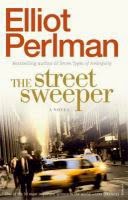
http://mylibrary.wollongong.nsw.gov.au/cgi-bin/spydus.exe/ENQ/OPAC/ALLENQ?ENTRY=the street sweeper perlman&ENTRY_NAME=BS&ENTRY_TYPE=K&ISGLB=0&GQ=the street sweeper perlman From the civil rights struggle in the United States to the Nazi crimes against humanity in Europe, there are more stories than people passing each other every day on the bustling streets of every crowded city. Only some survive to become history.
 As two men – recently released from prison, Lamont Williams and Australian historian Adam Zignelik, try to survive in early twenty-first century New York, history comes to life in ways neither of them could have foreseen. Two very different paths lead to one greater story as The Street Sweeper, in dealing with memory, love, guilt, heroism, the extremes of racism and unexpected kindness, spans the twentieth century to the present and spans the globe from New York to Melbourne, Chicago to Auschwitz.
 
We have tackled some big books this year and Perlman’s The Street Sweeper is the last of them. A sweeping (sorry about the pun) novel of over 500 pages, its story content is dense and at times harrowing, but was given huge praise from the majority of our group.
Some of us did find its volume too daunting and at best ‘just another holocaust story’, but of those that read to the end, it was thought unanimously a well-written, emotional story that horrified yet moved us.
We found Lamont an endearing character and quickly jumped on his bandwagon for the duration of the ride. Adam was intriguing and contained many characteristics of Perlman’s other protagonists, particularly from Three Dollars and Seven Types of Ambiguity.
And then there was the ‘memory’ theme that wove strong throughout the book …
 Memory is a willful dog. It won’t be summoned or dismissed but it cannot survive without you. It can sustain you or feed on you. It visits when it is hungry, not when you are. It has a schedule all its own that you can never know, It can capture you, corner you or liberate you. It can leave you howling and it can make you smile.
This paragraph was sighted by a few of us as being very poignant to the storyline, as there were many aspects and views that needed to come together. And in the end history is written by memories … what they contain and what they miss.
Overall The Street Sweeper scored high with our group. An indication that this novel promises a high quality read for those looking for such. 

Nov 10, 2014

Mr Penumbra's 24 Hour Book Store by Robin Sloan


The Great Recession has shuffled Clay Jannon away from life as a San Francisco web-design drone and into the aisles of Mr. Penumbra’s 24-Hour Bookstore. But after a few days on the job, Clay discovers that the store is more curious than either its name or its gnomic owner might suggest. The customers are few, and they never seem to buy anything—instead, they “check out” large, obscure volumes from strange corners of the store. Suspicious, Clay engineers an analysis of the clientele’s behavior, seeking help from his variously talented friends. But when they bring their findings to Mr. Penumbra, they discover the bookstore’s secrets extend far beyond its walls.

‘Dan Brown meets Enid Blyton’, as summed up by one of our members. 
It may be over simplifying this modern take on fantasy-realism (nothing simple about that tag), but it does encapsulate what Mr Penumbra’s Bookstore held in literary terms for our group.
An interesting aspect of reading fresh young authors is our tendency to identify them within our already read literature. Finding something completely new in fiction does not happen often, but this one comes close. Sloan’s blend of today’s cutting edge technology coupled with theological presence, not to mention that fabulous bookstore, had the majority of us compelled to read on. It certainly took us away to somewhere entirely new.
The scores stayed high, 7-8 and it was generally considered to be an entertaining book with simple language and a well thought out plot.
No prizes for guessing what the main topic of discussion was … books, books, books!!

Oct 3, 2014


In understanding successful people, we have come to focus far too much on their intelligence and ambition and personality traits. Instead, Malcolm Gladwell argues in Outliers, we should look at the world that surrounds the successful – their culture, their family, their generation and the idiosyncratic experiences of their upbringing, Along the way, Gladwell reveals what the Beatles and Bill Gates have in common, the reason you’ve never heard of the smartest man in the world, why almost no star hockey players are born in the fall, and why, when it comes to plane crashes, where the pilots are born matters as much as how well they are trained.

The lives of outliers – people whose achievements fall outside normal experiences – follow a peculiar and unexpected logic, and in uncovering that logic, Gladwell presents a fascinating and provocative blueprint for making the most of human potential.
 
Up until recently our group has not read a lot of non-fiction, but this year we decided to make a concerted effort to do so. The question is … what should we read? Our interests are wide and varied so it shouldn’t be too hard to find something. The problem is, as readers we have already read most of the non-fiction that appeals to us.

Here is where an author like Malcolm Gladwell comes in. His books tend to be written as a social commentary (backed with studies and statistics) on a combination of universally significant, and yet at times seemingly banal topics. In the Outliers he talks us through the circumstances which result in everything from star hockey players and award winning airlines, to software magnets and multi-millionaire entrepreneurs. His statistics can bring on a slight case of the ‘glazed eye’ syndrome, but his research is sound and generally he argues his case in a very entertaining and informative way.

On the whole we found the read to be serious food for thought with an amazing amount of information fired out at a fast pace. Certainly fast enough to keep those pages turning!

Everyone had their favourite  chapter … some liked the idea of the magic 10,000 hours of practice, others the close look at cultural differences, and then Gladwell’s last chapter outlining his own family background we all found extremely interesting, adding a real human touch to an author so consumed with facts and figures.
Whichever, they all culminated in a great discussion on a huge range of topics. A perfect book for a group interested in a constantly changing and puzzling world.  Highly recommended!


Aug 28, 2014

http://mylibrary.wollongong.nsw.gov.au/cgi-bin/spydus.exe/ENQ/OPAC/BIBENQ?ENTRY_NAME=BS&ENTRY=luminaries+catton&ENTRY_TYPE=K&NRECS=10&SORTS=HBT.SOVR&SEARCH_FORM=%2Fcgi-bin%2Fspydus.exe%2FMSGTRN%2FOPAC%2FBSEARCH&CF=GEN&ISGLB=0
 It is 1866, and Walter Moody has come to make his fortune upon the New Zealand goldfields. On arrival, he stumbles across a tense gathering of twelve local men, who have met in secret to discuss a series of unsolved crimes. A wealthy man has vanished, a whore has tried to end her life, and an enormous fortune has been discovered in the home of a luckless drunk. Moody is soon drawn into the mystery: a network of fates and fortunes that is as complex and exquisitely patterned as the night sky.
 
This year’s most challenging read would have to be Booker winner, The Luminaries by Eleanor Catton. Not a group to easily shy away from a challenge, everyone made a concerted effort to tackle this 800+ page door stop!
From a discussion perspective, this novel delivered an abundance of material. We found the author’s use of astrological charts to define her characters intriguing. Their circular synergy was captivating, releasing piece by piece everything needed to form a full picture of this literary jigsaw puzzle.
Although clearly a mystery set within the Victorian backwater of New Zealand’s south island, the multitude of layers formed by the different character viewpoints made this more than just a whodunit novel (Dickens came to mind for most of us). Keeping track of the various cast members was not easy, but for those of us who persevered, the awards were great. The plot, setting and description were all brilliantly combined and none of us could say we were not literally picked up and placed on the muddy streets of a colonial goldfield!
Alas, it was a little too much for some of us, who simply found the volume of pages a stumbling block too big to get over. But if you love a large chunk of well researched and brilliantly constructed literature, then The Luminaries must be your next big read!